On the A-side we find The Skatalites with “Jazz Walking,” a moody
reading of Count Basie’s 1957 jazz composition “Splanky.” The Skatalites
were largely schooled musicians raised on jazz, and that background
comes through clearly on this single, which leans heavily toward the
jazzy side and therefore doesn’t really sit under the ‘ska’ banner.
Recorded in the early 1960s, the track remained unreleased until it
finally surfaced on CD in 1999. Although billed to The Skatalites, it
was in fact a gathering of session players — including Tommy McCook,
Ernest Ranglin and Rolando Alphonso — cutting this jazz session for Duke
Reid.
On the flip we hear the virtually unknown Yard Brooms, who released
only a handful of singles in the late ’60s, delivering a little gem of a
rocksteady tune with “If You See Jane.” The Yard Brooms were an obscure
studio vocal group, or vocal pseudonym, created specifically for Duke
Reid’s Treasure Isle sessions. Produced in 1968 by Duke Reid, it was
originally issued on Duke’s Treasure Isle label as the B-side of “Mary
Poppins” by Danny Simpson with Tommy McCook & The Supersonics. Some
sources whisper that Sly Dunbar and Barry York were part of the lineup,
but those details remain lost in the misty history of Jamaican music.
Arthur "Duke" Reid recorded 'I Shall Wear a Crown' at Kingston's Federal
Records Studio in 1963. Occupying the A-side, the track pairs the
gospel-influenced vocal harmonies of the duo credited as the Richard
Brothers with a brass section fronted by trumpeter Oswald "Baba" Brooks
and his band. Released on Reid's Dutchess imprint, the single captures
the sound of Kingston's sound system scene just before Jamaican
musicians came together to form The Skatalites. Four decades later, UK
producers Duke and Chris Peckings revisited the underlying riddim for
Bitty McLean's 2004 vocal Only You.
Once the Richard Brothers finish their vocal pass on the top side,
the flip side's instrumental 'Duck Soup' shifts into high gear. A sharp
drum intro sets off an unrelenting ska riddim led by Brooks on trumpet,
making it impossible to stand still. Beyond his work for Duke Reid, the
trumpeter and bandleader ran sessions for Prince Buster and Sonia
Pottinger, and recorded Guns Fever for Coxsone Dodd in 1965. Duck Soup
originally debuted on Jamaican 7-inch vinyl in 1962 as the B-side to
Derrick & Patsy's vocal duet 'Love Not To Brag'.
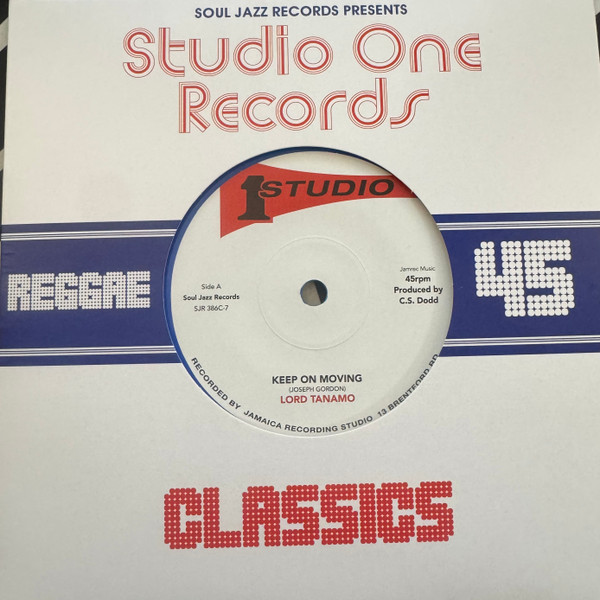
Zwei unwiderstehliche Studio-One-Klassiker auf einer Single! Lord Tanamo verbindet auf „Keep On Moving“ gefühlvollen Gesang mit einem groovenden Reggae-Rhythmus, inspiriert von amerikanischem Soul und Funk. Auf der B-Seite liefert der legendäre Keyboarder Jackie Mittoo mit „Totally Together“ ein mitreißendes Instrumental voller rollender Orgel-Licks und funky Grooves.
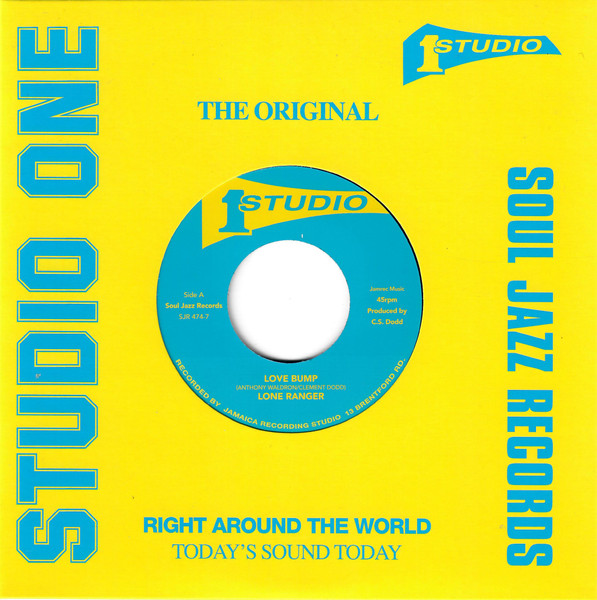
Ein echter Studio-One-Dancehall-Klassiker aus dem Jahr 1981! Lone Ranger begeistert auf „Love Bump“ mit seinem lässigen Toasting und einem unwiderstehlichen jamaikanischen Groove. Die Brentford Rockers liefern auf der B-Seite die passende instrumentale Version mit tiefem Bass, treibenden Drums und satten Bläsern.
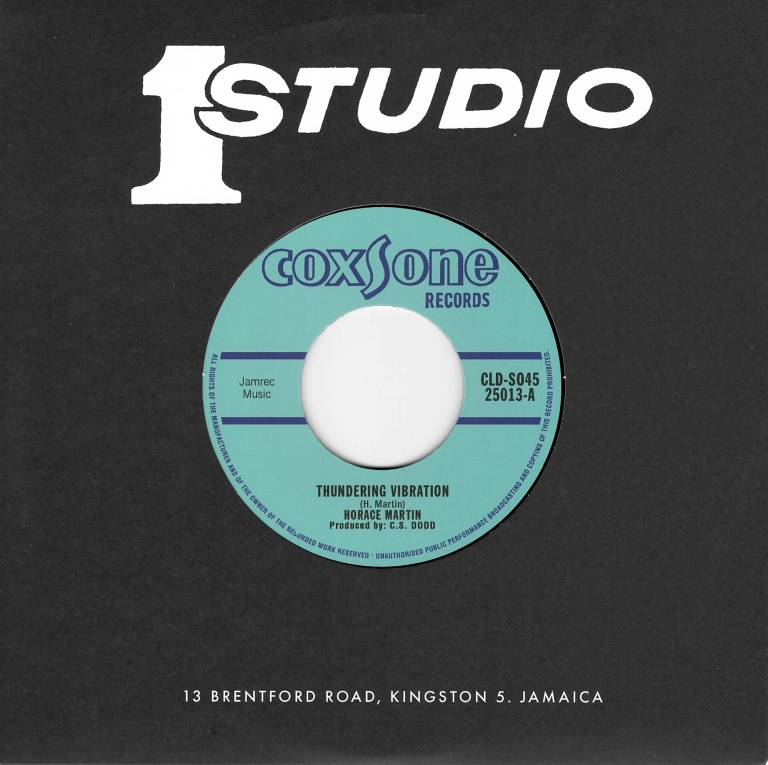
Zwei Studio-One-Klassiker aus der goldenen Rocksteady-Ära! Horace Taylor eröffnet mit „Thundering Vibration“ und einem treibenden, instrumentalen Groove voller Energie. Auf der B-Seite begeistert Marcia Griffiths mit ihrem unvergesslichen Rocksteady-Hit „Feel Like Jumping“, getragen von ihrer warmen Stimme und einem unwiderstehlichen Rhythmus
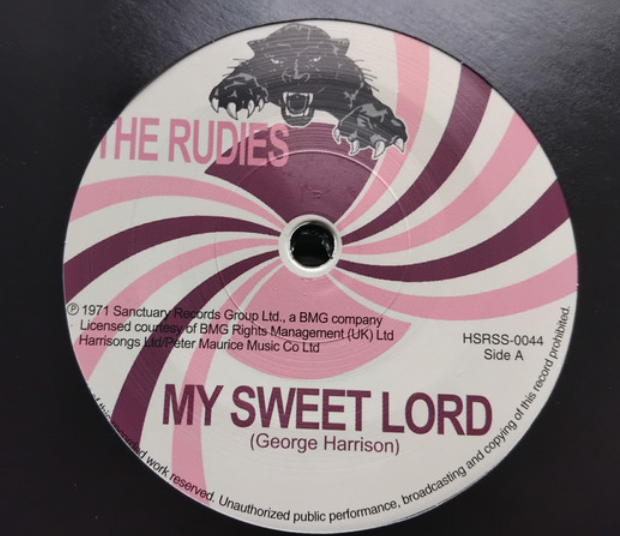
Ein gesuchter Boss-Reggae-Klassiker aus dem Jahr 1971! The Rudies verwandeln George Harrisons „My Sweet Lord“ in ein wunderschönes, orgelgetragenes Reggae-Instrumental mit entspanntem Groove und typisch jamaikanischem Flair. Auf der B-Seite wartet mit „Devil’s Lead Soup“ ein weiterer instrumentaler Höhepunkt: tiefe Orgel, treibender Rhythmus und jede Menge Early-Reggae-Atmosphäre.
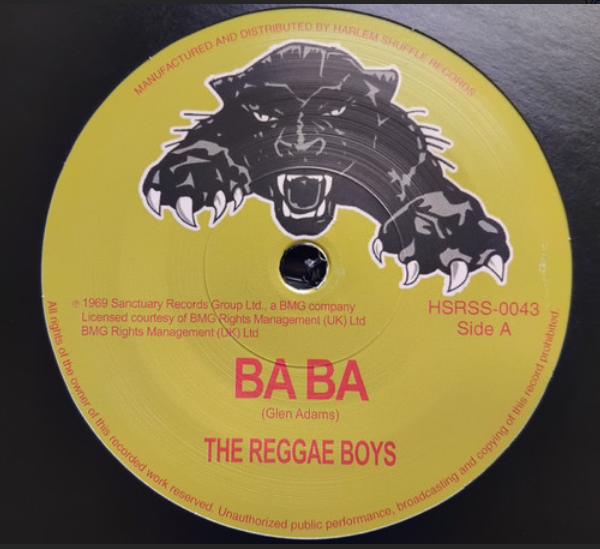
„Ba Ba“ wurde von Lee „Scratch“ Perry produziert und besticht durch einen unwiderstehlichen Groove und den markanten Gesang der Reggae Boys. Der Track erschien ursprünglich nur einmal in Großbritannien auf dem Pama-Sublabel GAS und ist seitdem eine gesuchte Rarität. Auf der B-Seite liefert Glen Adams mit „Power Cut“ eine herrliche instrumentale Orgel-Version.